
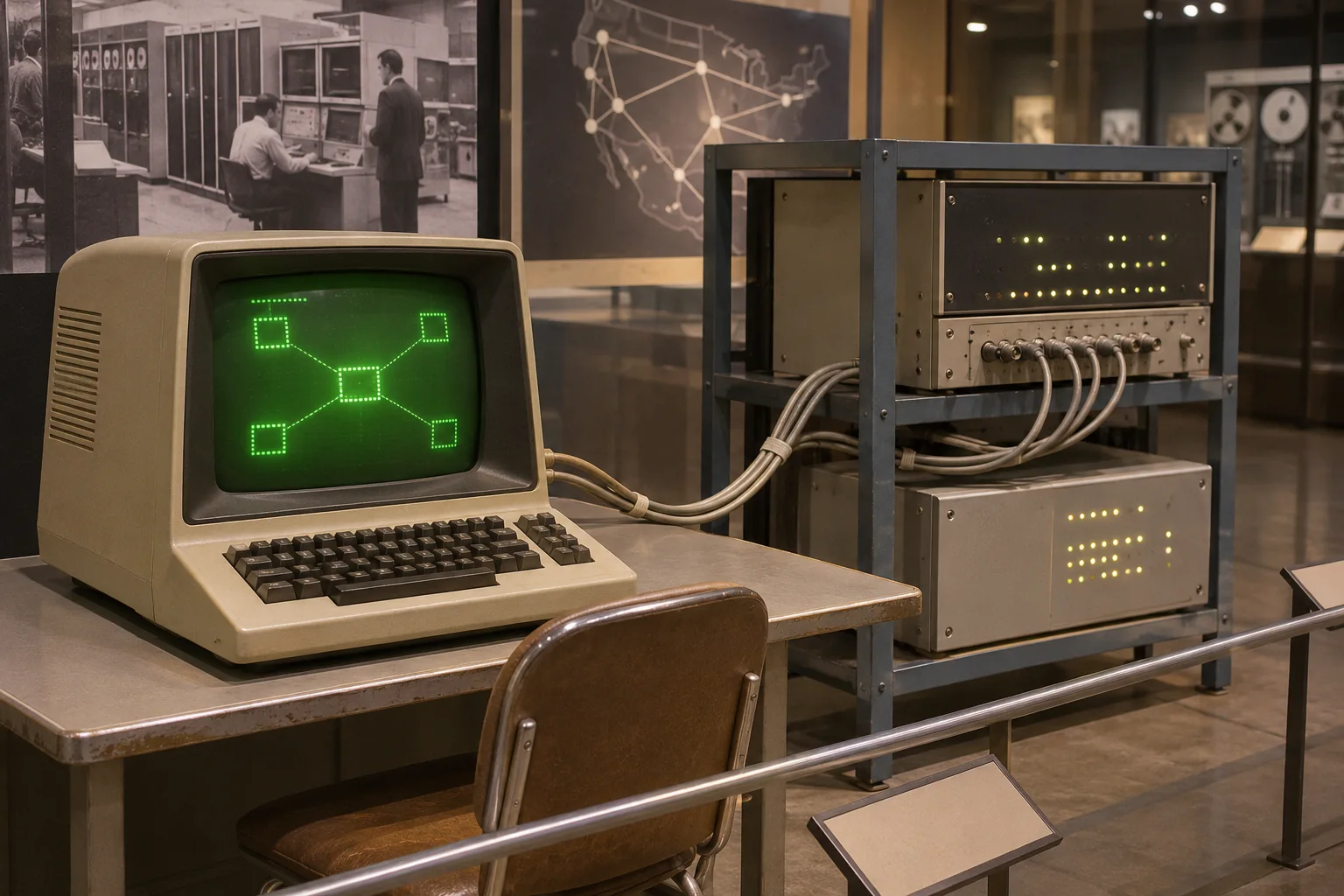
Software and networks expanded computing beyond a single machine. Shared protocols, operating systems, online services, and the web connected users and information in ways that reshaped work, communication, and culture.
Software is part of the record
Programs are historical artifacts with their own authorship, versions, dependencies, and user communities. Source code, manuals, packaging, screenshots, and oral histories may all help explain what software did and how people encountered it.
Networks need shared rules
Computer networks depend on hardware and agreed protocols for addressing, routing, and exchanging data. The growth of networking was not a single moment; it involved research, standards, infrastructure, institutions, and increasingly diverse users.
From online services to the web
People used networked systems for messaging, file exchange, remote access, and information services before the web became widely familiar. Browsers and websites later made networked information easier to navigate, while raising new questions about privacy, ownership, and access.
Preserving digital context
A file can become unreadable when its format, software, or hardware disappears. Digital preservation may require documentation, emulation, migration, and careful rights review. Do not copy or publish software or personal data without permission.
Keep exploring
Continue through Hariax for more computing history, object stories, and practical learning ideas.
Explore collections