
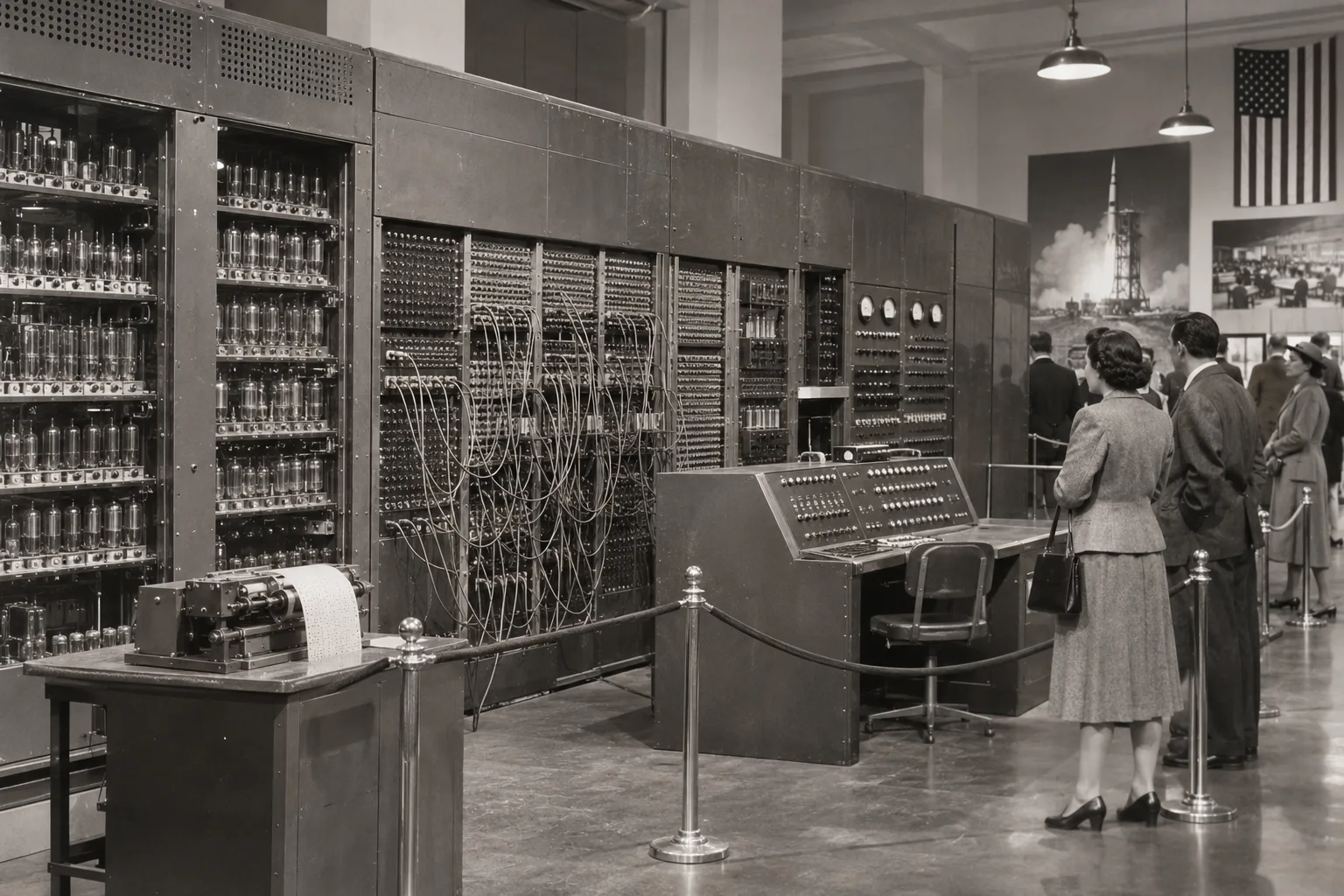
Early computers were built for demanding tasks and operated in environments very different from today’s personal devices. Their cabinets, wiring, input methods, and room layouts offer clues about how computation was organized.
What counted as a computer
The word “computer” has described people, calculators, specialized devices, and programmable electronic systems. To understand an early machine, ask what it could store, which instructions it followed, how users supplied data, and what outputs it produced.
Hardware and the room around it
Early electronic machines relied on components such as vacuum tubes, relays, switches, and extensive wiring. Heat, power, reliability, and maintenance affected where a computer could operate. Photographs of a machine room can show infrastructure that a close-up of a panel cannot.
Programs, operators, and teams
Early computing depended on programmers, operators, engineers, and subject specialists. Instructions could be entered with switches, cards, tape, or other media. The people preparing jobs and interpreting results were part of the system, even when later accounts focused mainly on hardware.
Reading artifacts carefully
A surviving cabinet may have been modified, rebuilt, or assembled from parts over time. Labels and recollections are valuable starting points, but provenance records and technical documentation help clarify what is original and how the machine changed.
Keep exploring
Continue through Hariax for more computing history, object stories, and practical learning ideas.
Explore collections