
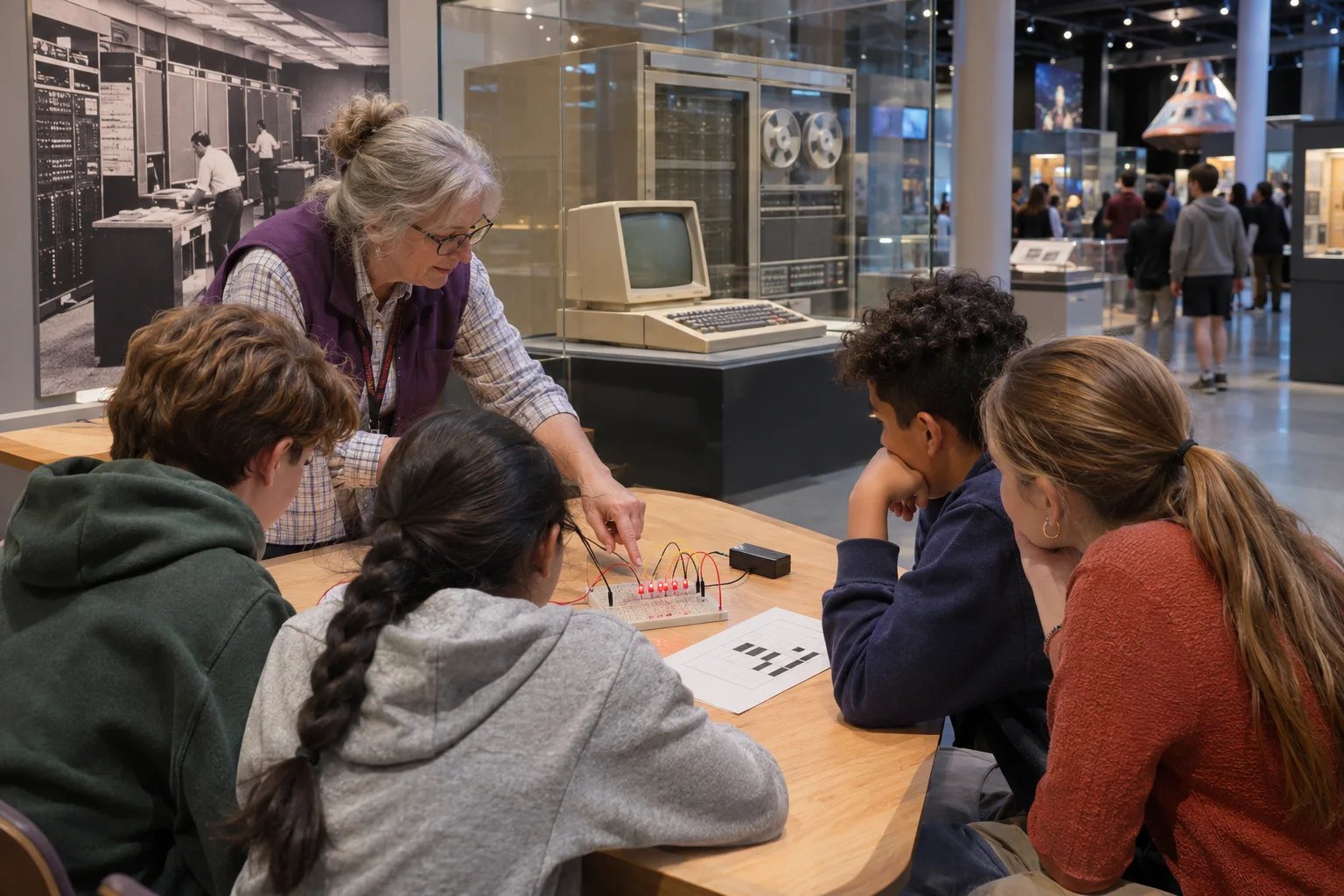
Computing history can make abstract ideas visible. A simple activity with binary patterns, algorithms, memory, or input and output can help learners connect historical machines with concepts they use today.
Try a binary pattern
Use a row of cards or switches to represent powers of two. Turn each position on or off, then combine the values to represent a number. This simple exercise introduces a core idea without requiring a computer or specialized kit.
Trace an algorithm
Write clear instructions for a familiar task, such as sorting cards by number. Ask a partner to follow the steps exactly. When the process fails, revise the instructions. This shows how algorithms depend on precise, ordered rules.
Compare input and output
Choose a device and list how it receives information, processes it, stores results, and communicates output. Compare a mechanical calculator with a laptop or phone. The technologies differ, but the input-process-output model offers a useful starting point.
Make access part of the design
Learning activities should offer more than one way to participate. Provide written and spoken instructions, allow extra time, and adapt materials for different ages and abilities. A hands-on lesson works best when learners can ask questions and test ideas safely.
Keep exploring
Continue through Hariax for more computing history, object stories, and practical learning ideas.
Explore collections