
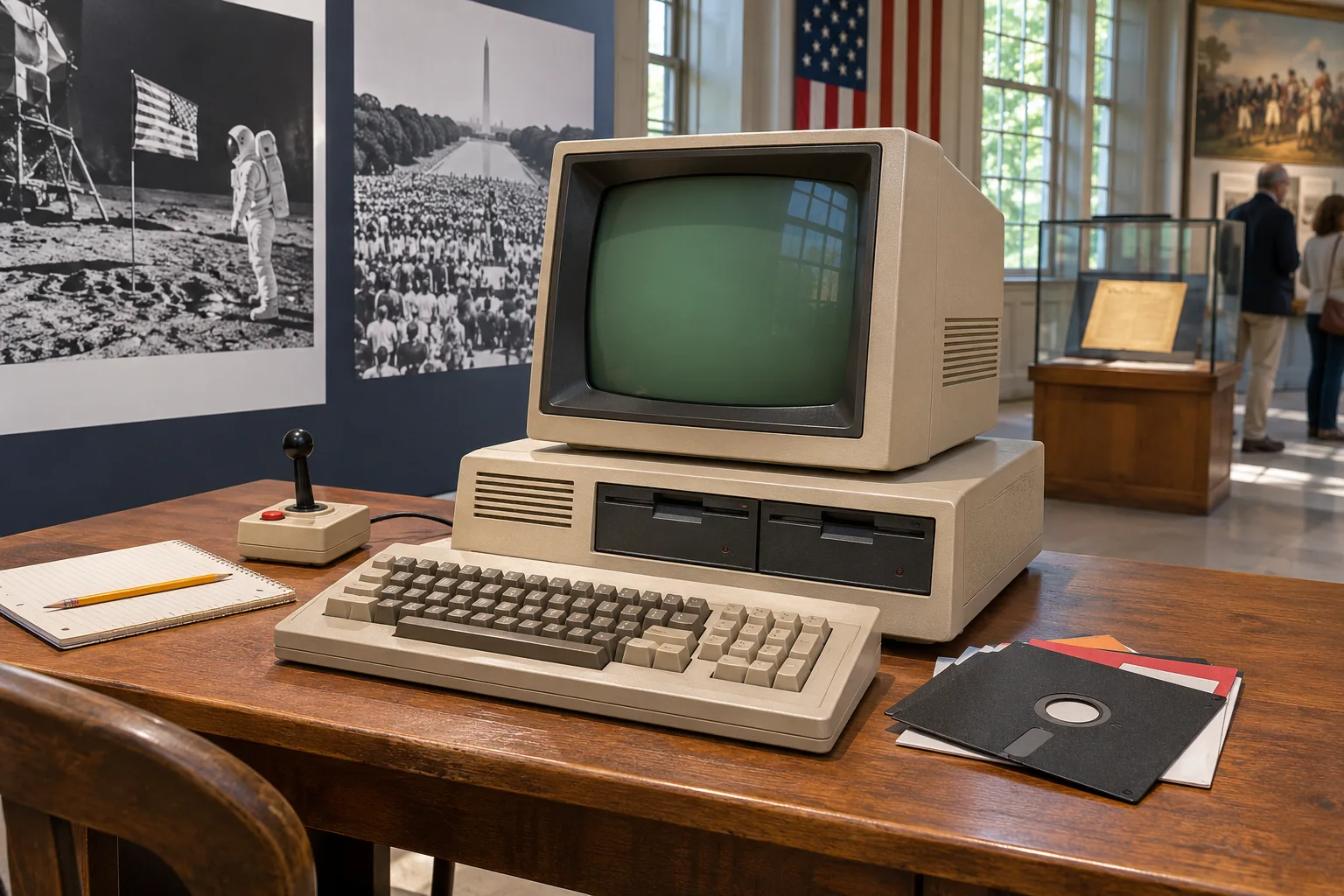
Personal computing changed the relationship between people and machines. A computer could become a tool for writing, learning, design, games, communication, and experimentation in homes and workplaces.
A changing idea of access
Personal computers emerged through several strands: hobbyist experimentation, commercial products, educational needs, and office automation. The transition was gradual. Price, reliability, software availability, support, and familiarity shaped who could use them.
Interfaces and everyday tasks
Keyboard layouts, command lines, graphical interfaces, displays, storage media, and printers influenced how a computer felt to use. A change in interface could make a machine more approachable while creating new expectations about how work should be done.
Software communities
Applications helped define what people thought a personal computer was for. Word processing, spreadsheets, programming tools, databases, creative software, and games each built communities of users. Manuals, magazines, clubs, and user groups spread knowledge beyond manufacturers.
The home computer as an artifact
A home computer may carry personal memories as well as technical history. When documenting one, note its model, accessories, software, modifications, and the story its owner is willing to share. Avoid publishing private files or personal data found on old storage media.
Keep exploring
Continue through Hariax for more computing history, object stories, and practical learning ideas.
Explore collections