
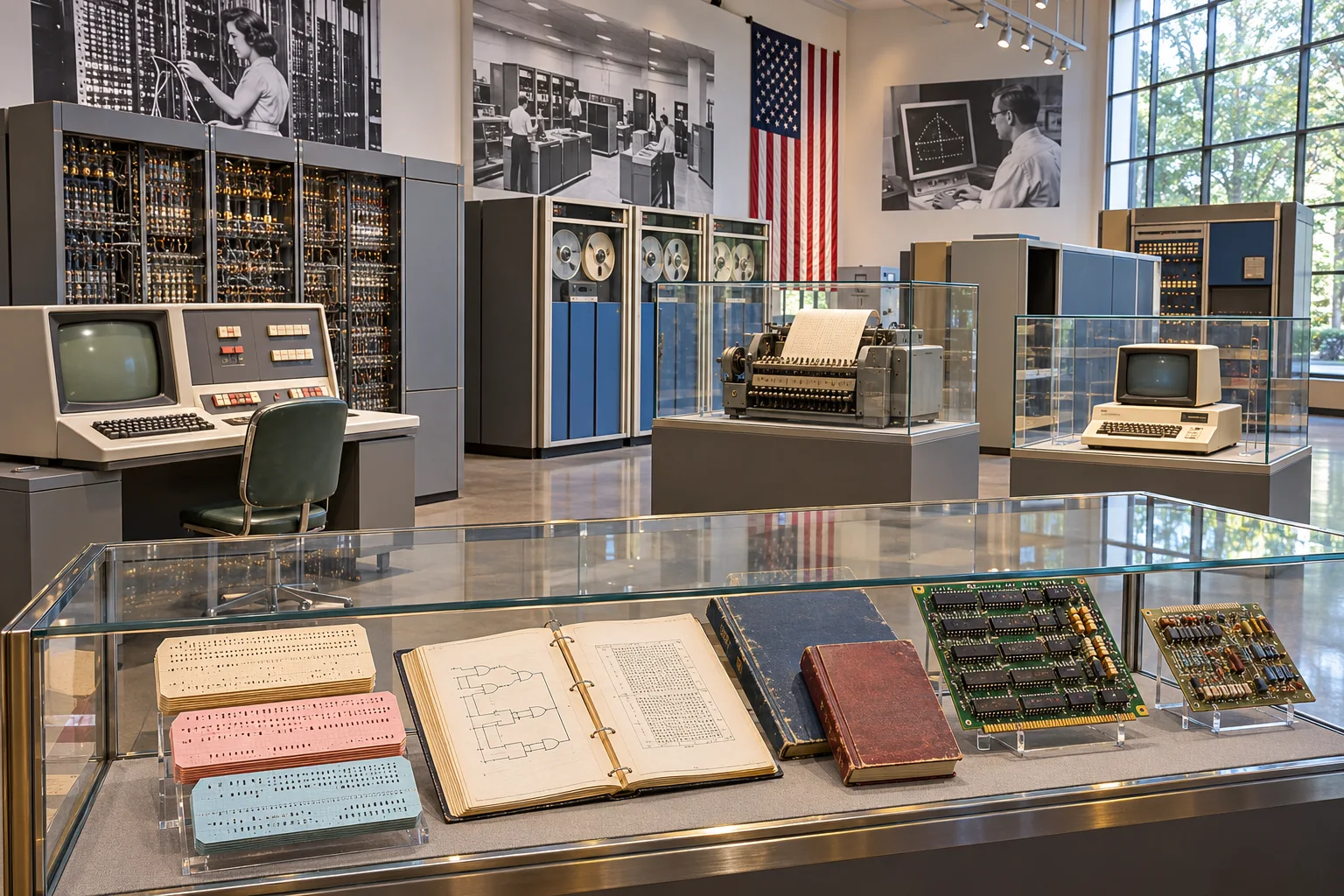
A computing collection can include a single calculator, a room-sized system, a software manual, a circuit board, or the personal notes of someone who used a machine. Each object offers a different way into the history of technology.
Read an object in context
Begin by identifying what is visible: material, controls, connectors, labels, dimensions, and condition. Then ask what documentation exists. Catalog records, manuals, advertisements, photographs, and interviews can help place an artifact in a time and community.
Hardware tells a partial story
A device can show how engineers solved physical problems, but it may not explain how users experienced it. Pair hardware with software, peripherals, work instructions, and testimony when possible. That broader view helps connect design choices to everyday practice.
Small objects deserve attention
Punch cards, tapes, printed output, chips, and repair notes can reveal workflows that large machines obscure. Small artifacts are also easier to lose or misidentify, so labels, storage conditions, and catalog records are essential.
Share with care
A digital collection should provide clear captions and explain uncertainty. Respect donor terms, intellectual property, and privacy. If an artifact’s identity is not confirmed, describe what is known and invite corrections supported by evidence.
Keep exploring
Continue through Hariax for more computing history, object stories, and practical learning ideas.
Explore collections