
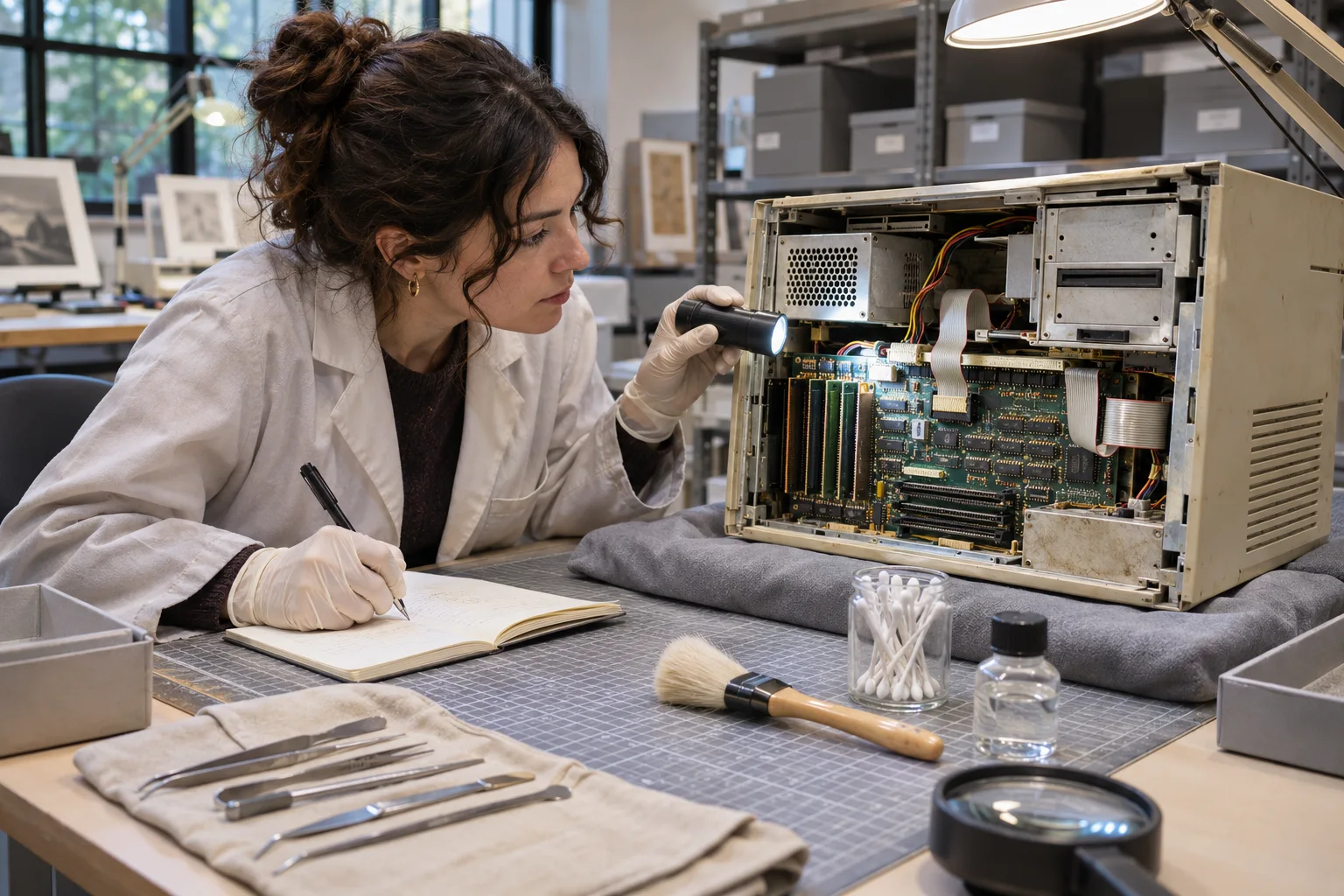
Computing artifacts include hardware, software, documents, recordings, and personal knowledge. Preserving them requires more than keeping a machine on a shelf: context, condition, ownership, and safe handling all matter.
Document before moving
Record an artifact’s current location, visible condition, labels, accessories, and known history before changing its setup. Photograph it from several angles and keep notes with the object. A simple inventory can prevent cables, media, or paperwork from becoming separated.
Handle equipment safely
Old electronics may contain hazardous materials, fragile components, batteries, or high-voltage parts. Do not power on unknown equipment or open a casing without appropriate expertise. Consult a qualified conservator or electronics professional when an artifact needs assessment.
Preserve software and data responsibly
Magnetic media and optical discs can deteriorate, while obsolete drives and formats make access difficult. Preserve original media where possible and create access copies only with proper equipment, permissions, and privacy safeguards. Personal files can contain sensitive information.
Keep provenance and permissions
Ownership history, donor agreements, software licenses, and publication permissions shape what an archive may display or copy. Preserve documentation alongside the machine and seek legal or institutional guidance when rights are unclear.
Keep exploring
Continue through Hariax for more computing history, object stories, and practical learning ideas.
Explore collections