
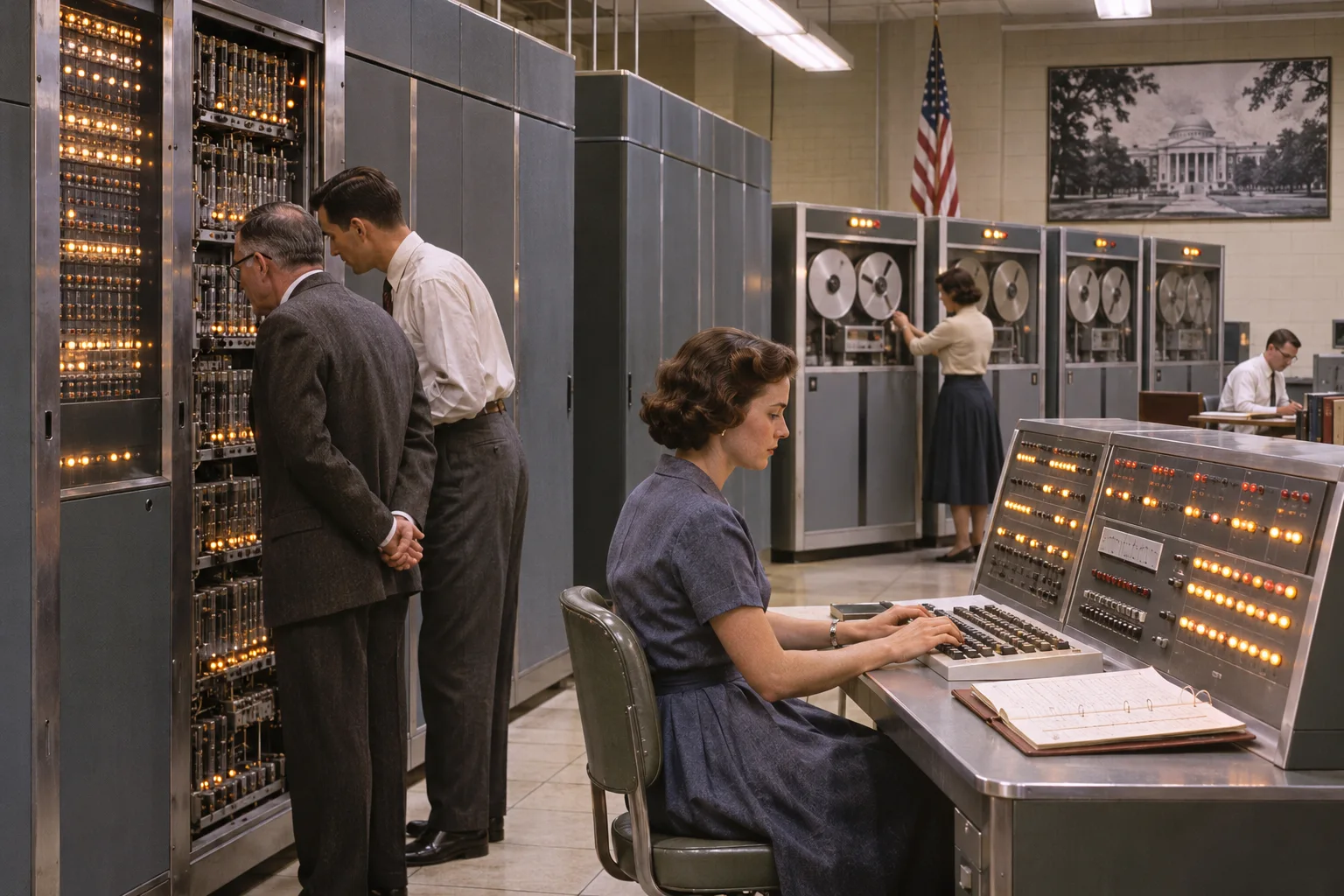
Mainframes brought computing into the recurring operations of businesses, universities, public agencies, and research organizations. Their influence came from shared access, dependable data processing, and the many systems built around them.
Centralized computing
A mainframe environment often combined a central computer, storage, terminals, communications links, and carefully managed operating procedures. Users could submit work from different departments while specialized teams maintained the system and controlled access.
Batch work and interactive use
Batch processing grouped tasks for efficient execution. Later time-sharing and interactive terminals gave users more direct access to computing resources. These approaches coexisted, reflecting different needs for throughput, response time, security, and cost.
Software made the system useful
Operating systems, compilers, databases, transaction software, and business applications turned hardware into a platform. A mainframe’s history is incomplete without the software teams and operating practices that helped organizations rely on it.
Legacy systems today
Some mainframe platforms remain in active use because they support critical services and long-lived records. Preservation work must distinguish between historical artifacts and operational infrastructure, and respect security, privacy, and ownership boundaries.
Keep exploring
Continue through Hariax for more computing history, object stories, and practical learning ideas.
Explore collections